
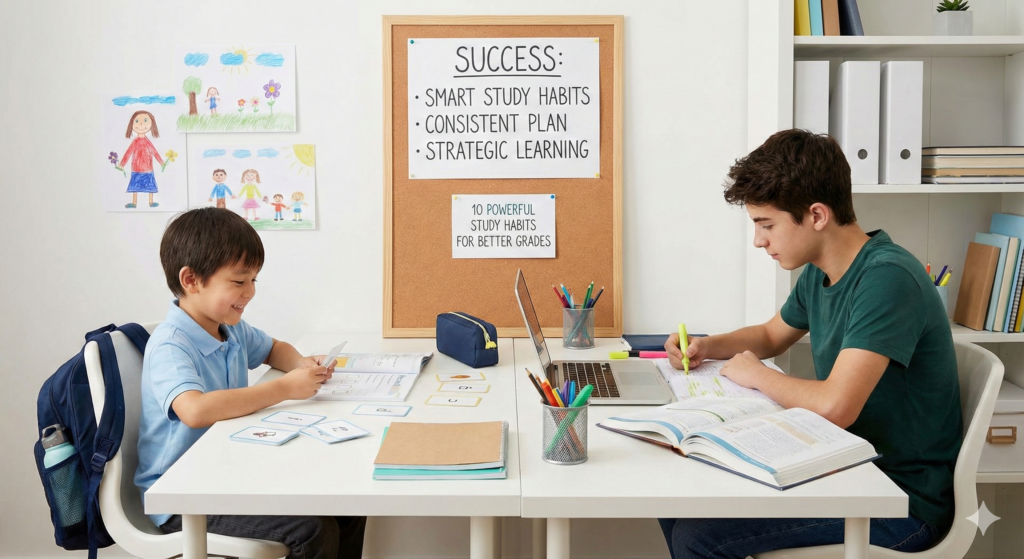
Success in school doesn’t come from luck or natural talent alone — it comes from developing smart study habits that make learning easier, faster, and more enjoyable. Every student can achieve great results if they follow a consistent plan and study strategically.
Whether you are a primary school learner or a high school student, these 10 powerful study habits will help you understand lessons better, remember more, and perform well in exams.
Let’s explore them one by one!
1. Create a Regular Study Routine
The first key to effective studying is consistency. The human brain learns best when it follows a routine. If you study at the same time each day, your mind automatically prepares to focus when that time arrives.
👉 How to build your routine:
Choose a fixed time daily for studying — for example, 5 PM to 7 PM.
Keep a quiet, clean, and comfortable study area.
Follow your schedule every day, even on weekends if possible.
When studying becomes part of your daily life, you’ll never feel like you’re “forcing” yourself to do it. It becomes natural, just like brushing your teeth!
2. Set Clear and Realistic Goals
Studying without a goal is like driving without knowing your destination. To stay motivated and organized, you must have clear goals for what you want to achieve.
👉 Examples of smart study goals:
“I will memorize all multiplication tables by Friday.”
“I will finish reading one English story each week.”
“I will review science notes for 20 minutes every night.”
Use the SMART formula for goal setting:
Specific
Measurable
Achievable
Relevant
Time-bound
Having clear goals gives you direction and a sense of accomplishment when you reach them.
3. Break Study Sessions Into Smaller Parts
Many students think studying for long hours means better results — but that’s not true! The brain remembers better when information is learned in short, focused sessions.
👉 Try this method:
Study for 25–30 minutes, then take a 5-minute break.
After 3 sessions, take a longer break (15–20 minutes).
This technique, called the Pomodoro Method, helps maintain concentration and prevents tiredness. Short breaks refresh your brain, so you return ready to absorb more knowledge.
4. Keep Your Study Space Organized
A cluttered desk leads to a cluttered mind. Keeping your study space clean and organized helps you focus better and saves time.
👉 Tips for an effective study space:
Keep only what you need: books, pencils, notebook, and a water bottle.
Avoid distractions like phones or TV.
Use folders or labels to arrange notes by subject.
When everything is in its place, you spend less time searching and more time studying.
5. Use Active Learning Techniques
Passive reading is not enough — you must interact with the material. Active learning means engaging your brain through thinking, writing, and explaining what you learn.
👉 Active learning ideas:
Summarize each lesson in your own words.
Teach a friend or family member what you just learned.
Use flashcards to test your memory.
Ask yourself questions while reading.
When you explain something aloud, your brain processes it deeply — making it easier to remember.
6. Stay Positive and Believe in Yourself
A positive attitude can change the way you learn. When you believe that you can do well, your brain becomes more open to learning new things.
👉 Ways to stay positive:
Start each study session with a positive thought: “I can do this!”
Don’t be afraid to make mistakes — they are part of learning.
Celebrate small achievements like completing a chapter or improving your test score.
Remember: confidence is a skill that grows with practice. Be patient and keep going!
7. Take Care of Your Body and Mind
Your body and mind are connected. You can’t focus on studies if you are tired, hungry, or stressed. Taking care of your health is a big part of being a successful student.
👉 Healthy habits to follow:
Eat nutritious foods like fruits, nuts, and vegetables.
Sleep for at least 7–8 hours every night.
Do light exercises or stretches between study sessions.
Stay hydrated — drink enough water throughout the day.
When your body feels good, your brain works at its best!
8. Review and Revise Regularly
Many students study something once and forget it after a few days. To make information stick, you need to review regularly.
👉 How to revise effectively:
Spend 10–15 minutes daily reviewing what you learned.
Make short summary notes or diagrams.
Use weekends for quick revisions of the week’s lessons.
Before exams, focus on key points, not everything.
The more often you review something, the stronger your memory becomes.
9. Avoid Multitasking
Trying to do many things at once — like chatting, watching videos, and studying — actually reduces your concentration. Your brain can only focus well on one thing at a time.
👉 Try this:
Switch off your phone or keep it away while studying.
Inform your friends or family not to disturb you during study time.
Focus fully on one subject or topic before moving to the next.
You’ll notice how much faster and better you learn when you give your full attention to one task.
10. Reward Yourself for Hard Work
Studying doesn’t always have to feel serious — add some fun! After completing your goals, reward yourself. Rewards help your brain connect learning with happiness and satisfaction.
👉 Reward ideas:
Take a short walk or watch your favorite cartoon.
Eat your favorite snack.
Spend time on your hobby.
Give yourself a big “Well done!”
Small rewards make studying more enjoyable and motivate you to keep going.
🌟 Final Thoughts
Success in school is not about being the smartest — it’s about being disciplined, consistent, and motivated. By following these 10 smart study habits, you can improve your focus, memory, and confidence.
Start small — maybe by choosing just two or three of these habits this week. Once you see how much better your study sessions become, you can add more.
Remember, every great learner started with one good habit. Today is the perfect day to begin building yours!
📘 Key Takeaways
Study at the same time each day to train your brain.
Set specific and realistic goals.
Study in short sessions with breaks.
Keep your desk clean and distraction-free.
Engage actively — write, explain, and question.
Stay positive and take care of your body.
Review regularly and reward your progress.