
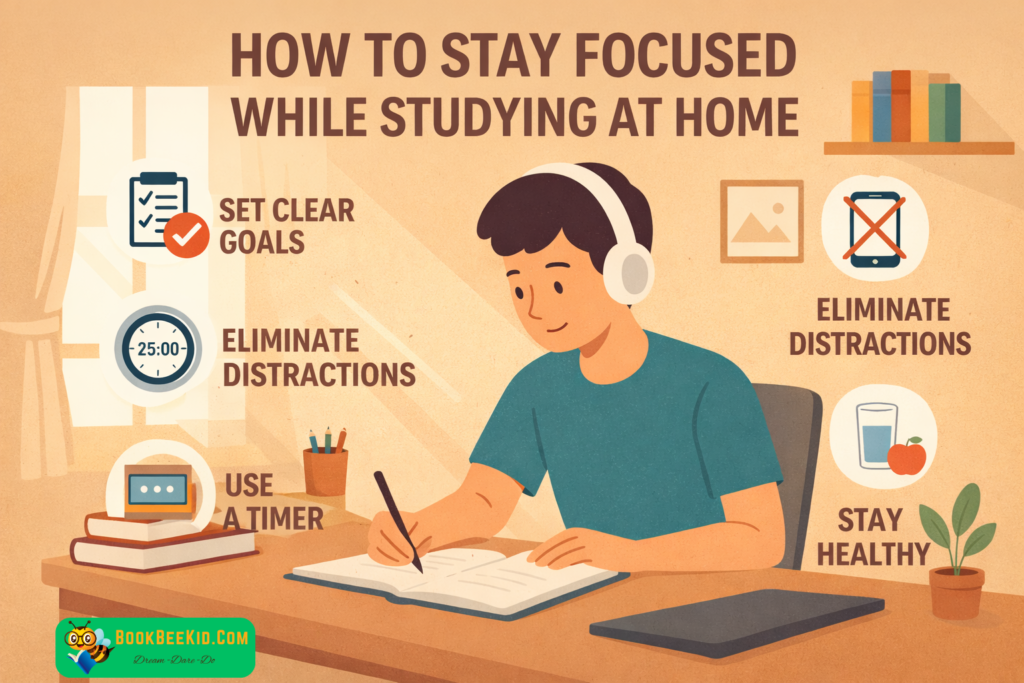
Studying at home can feel comfortable and convenient, but it also comes with distractions—family noise, mobile phones, social media, snacks, and even the temptation to lie down “just for five minutes.” Many students struggle to stay focused while studying at home, especially when their surroundings blur the line between relaxation and learning.
The truth is that home environments can either support your learning or quietly sabotage your productivity. The good news is that with the right strategies, routines, and mindset, you can turn your home into a powerful study space that boosts focus, motivation, and results.
This guide dives deep into science-backed techniques, practical tips, and long-term habits that help you stay focused and study smarter at home.
1. Create a Dedicated Study Space
Your environment has a powerful effect on your ability to concentrate. When you study in the same area where you relax, eat, or sleep, your brain becomes confused about what it should be doing.
How to build the perfect study zone:
Choose a quiet place with minimal foot traffic.
Keep only study-related items on the desk.
Use good lighting—natural light is best.
Keep your space clean and clutter-free.
Add small motivational elements like a plant or quote poster.
When your brain associates a specific space with studying, concentration becomes easier and faster.
2. Set Clear and Achievable Study Goals
A common reason for losing focus is not knowing what you should be doing. When tasks feel too big or unclear, your mind wanders.
Break goals into small, clear steps:
“Finish Chapter 5”
“Complete 10 math problems”
“Revise English grammar for 30 minutes”
Small goals create momentum. The more tasks you complete, the more motivated you feel.
3. Use Powerful Time-Management Methods
Time-management systems help your brain stay sharp by creating structured study bursts and timed breaks.
Three effective techniques:
✔ Pomodoro Technique
Study 25 minutes → Take a 5-minute break.
Repeat 4 times → Take a longer 15–20-minute break.
✔ 50–10 Rule
Study for 50 minutes → Rest for 10 minutes.
This works well for deep study sessions.
✔ Task Batching
Group similar tasks together.
Example:
30 min for reading
30 min for writing
30 min for revision
This reduces mental switching and keeps your mind focused.
4. Eliminate Digital Distractions
Phones are the number one reason students lose focus at home. Every notification interrupts your concentration, even if you don’t check it.
Try these methods:
Turn off notifications.
Put your phone in another room.
Use focus apps like Forest, Study Bunny, or StayFree.
Block distracting websites temporarily.
Remember: Your phone will still be there after your study session.
5. Create a Study Routine and Stick to It
Consistency trains the brain. When you study at the same time daily, your mind naturally becomes alert and ready to learn.
Build a routine that includes:
A fixed study start time
Planned breaks
A daily review session
A consistent bedtime
Studying becomes less of a struggle when your routine becomes a habit.
6. Use Active Learning Techniques
Passive learning (like reading without engagement) reduces concentration. Active learning keeps your brain alert and interested.
Some active learning methods:
Take handwritten notes
Teach the concept out loud
Use flashcards
Create mind maps
Practice questions after each topic
When your brain is actively involved, distractions fade naturally.
7. Stay Physically and Mentally Healthy
Your focus depends on your physical condition. A tired, dehydrated, or stressed brain cannot concentrate well.
Simple habits for better focus:
Drink enough water
Eat brain-boosting foods like fruits, nuts, and whole grains
Take short physical breaks
Stretch your body
Get 7–8 hours of sleep
Just a 5-minute walk or stretch can refresh your brain dramatically.
8. Control Your Surroundings
Your home environment may include noise, siblings, pets, or movement. Controlling these small factors can greatly improve focus.
Try these solutions:
Use noise-cancelling headphones
Play soft background music or white noise
Inform family of your study times
Close the room door
Avoid studying near the TV
Even a small change like moving your chair away from noisy areas can help.
9. Build Discipline Through Small Consistent Actions
Discipline is not something you magically have—it’s something you build. When you push yourself to stay focused for just 5 more minutes, your mental strength grows.
How to train your discipline:
Start with short study periods
Increase time slowly
Reward yourself after meeting goals
Track your daily progress
Every time you resist distraction, you train your brain to become stronger and more focused.
10. Review and Evaluate Your Progress Weekly
Studying without progress tracking is like walking without a destination. Weekly evaluations guide your learning journey.
Ask yourself:
Did I complete my goals this week?
Which distractions affected me?
What improvements can I make next week?
Which study method worked best?
Tracking your progress keeps you motivated and ensures continuous improvement.
🌟 Final Thoughts
Staying focused while studying at home may feel challenging, but it becomes surprisingly easy when you build the right system, environment, and habits. With a dedicated space, structured routine, smart time-management, and a proactive approach to eliminating distractions, your home can become the most productive place to study.
Remember: Success is built on small habits practiced consistently.
If you commit to these simple daily practices, you will not only stay focused at home but also become a more disciplined, motivated, and effective learner.